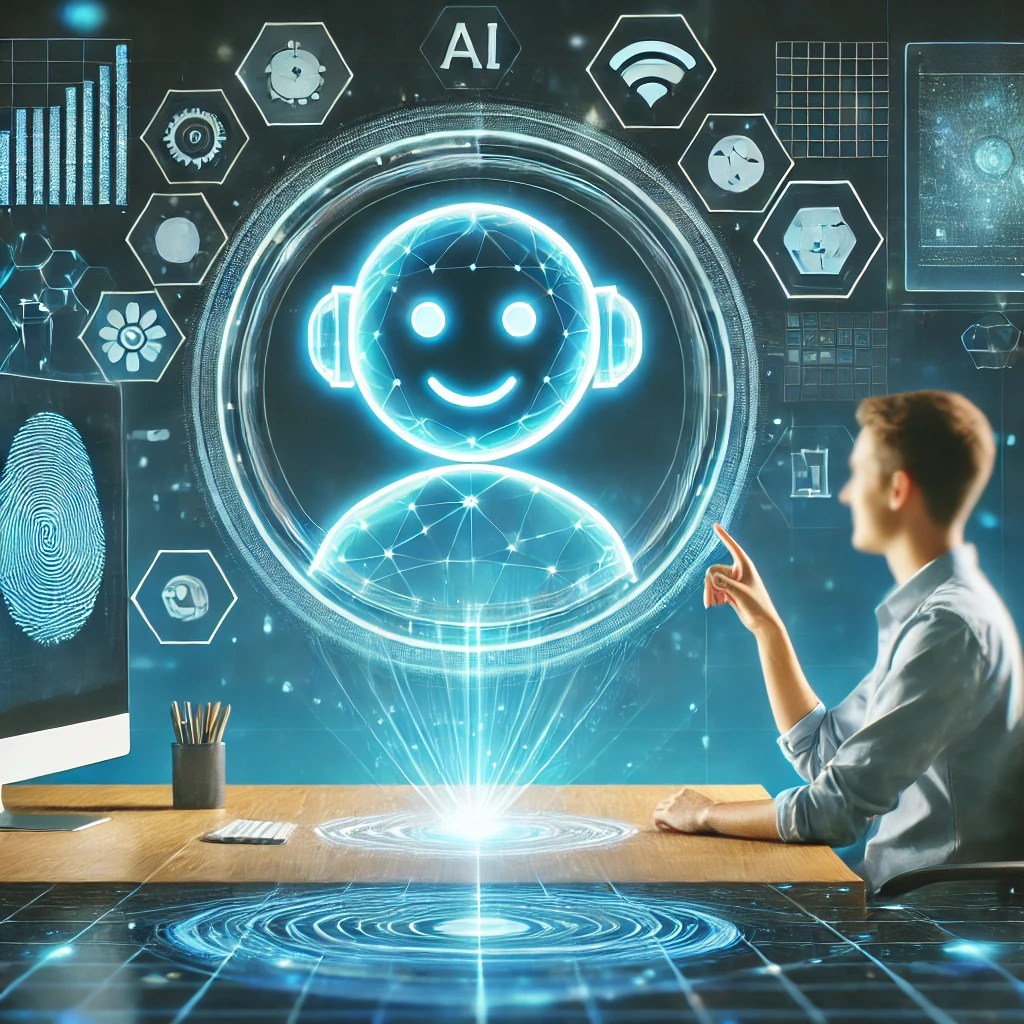
Back in late 1990s and early 2000s, I remember the excitement of email’s arrival. It was new, a novelty, and people eagerly signed up with Yahoo or Hotmail, proudly sharing their new email addresses with friends and colleagues. Having an email account quickly became a trend, and those who had one were part of the digital revolution. Fast forward to today, and we’re on the brink of yet another wave of innovation with AI agents.
In the next few years, AI agents could be as commonplace as email accounts were back then. Soon, people may begin creating personalized AI agents to automate their activities across platforms like email, Instagram, Facebook, WhatsApp, and other social media apps. Just as we once shared our email addresses, we might find ourselves introducing our AI agents to others, perhaps even naming them. It’s easy to imagine a future where we refer to people by the name of their AI agents, blending digital identity with daily life.
But what exactly are AI agents?
“An AI agent is a sophisticated software program powered by artificial intelligence, designed to perform tasks, interact dynamically with its environment, and continuously learn from data. These agents are capable of handling a broad spectrum of tasks, ranging from answering straightforward questions to resolving highly complex problems, making them versatile tools in both personal and professional settings.
One of the most powerful aspects of AI agents is their ability to automate tasks. Whether it’s managing emails, sorting through data, or even running entire workflows, AI agents can free up valuable time and resources by handling repetitive and time-consuming processes with efficiency and accuracy. As they work, these agents learn from each action they take and the feedback they receive, allowing them to become progressively smarter and more adept over time.
Self-learning is a defining feature of AI agents, enabling them to adapt and improve based on real-time feedback and changing conditions. By analyzing patterns and making adjustments, they can enhance their performance autonomously, responding to new information in ways that meet the user’s evolving needs. This adaptability allows AI agents to grow alongside users, continuously optimizing how they work and providing increasingly valuable support.
AI agents represent a shift toward more intelligent, responsive, and proactive technology, one that can seamlessly integrate into our lives and streamline everything from daily tasks to complex decision-making.”
Here’s an example of an AI agent task: imagine having a digital assistant that not only remembers your favorite coffee order but also orders it for you on your way to work. Now, let’s say you have an upcoming trip—this AI sidekick would automatically book your airfare without you lifting a finger. Here’s how it would go down: First, it checks your email or calendar (with your permission, of course) to confirm your travel dates and destination. Then, it remembers that you’re all about that aisle seat, would rather skip the red-eye, and love some extra legroom. Next, it does the hard part by finding the best flight deal, grabs your saved payment info, and finally, smoothly handles the airline’s booking system to lock it all in. Your trip is booked, and you didn’t even have to open a browser tab. Now that’s a travel buddy!
Where did the concept of AI agents come from?
Today, AI agents are seen as the next step in making AI both accessible and functional for a variety of purposes—helping people automate daily tasks, analyze large sets of data, and even handle complex interactions in a way that mimics human assistance. The concept of AI agents has thus grown from an idea of “thinking machines” to practical tools that can work alongside humans and enhance our productivity.
An AI agent learns from our activities and behavior, using this information to perform tasks—much like a child observing and mimicking a parent’s actions. As it gathers more insights, it becomes better at repeating and improving on tasks to fit our preferences.
What is the market size of AI agents
The market for AI agents is experiencing rapid growth and expansion, with projections indicating a significant increase in market value in the coming years. As of 2023, the autonomous AI and agent market was valued at around $4.1 billion and is expected to grow at an impressive compound annual growth rate (CAGR) of 39.6%, reaching approximately $112.4 billion by 2032. This surge is largely driven by advancements in machine learning, automation, and the integration of AI technologies in diverse fields such as customer service, autonomous vehicles, healthcare, and finance.
The demand for AI agents spans across industries that seek improved operational efficiency, reduced costs, and enhanced decision-making capabilities. For example, AI agents are used in manufacturing to optimize production, in finance to automate customer support and fraud detection, and in healthcare for patient support and data management.
To highlight the versatility of AI agents, consider the example of Tesla’s Full Self-Driving (FSD) AI agent, which operates within Tesla vehicles to enable a high degree of autonomous driving. This AI agent continuously monitors the environment, recognizing objects, road conditions, and traffic patterns to make split-second decisions that enhance safety and driving convenience. Tesla’s FSD combines advanced neural networks with real-time data processing, allowing the vehicle to perform tasks like lane changes, turns, and adaptive speed adjustments based on traffic flow.Tesla’s AI advancements show how AI agents are shaping industries by providing dynamic, adaptive solutions to complex real-world challenges.
Another example of a popular AI agent is Amazon’s Alexa, widely known for transforming how people interact with technology in their daily lives. Alexa acts as a virtual assistant, helping users manage tasks, play music, control smart home devices, set reminders, answer questions, and even place online orders. Powered by natural language processing and machine learning, Alexa continuously learns from interactions, allowing it to improve its accuracy and adapt to users’ preferences. Alexa’s versatility illustrates how AI agents are becoming integral to everyday routines, making technology more accessible and seamlessly integrated into our lives.
This shift hints at a future where these agents are deeply woven into daily life, not only as tools but as integral parts of people’s social and emotional worlds.
Thank you for reading! I’d love to hear your insights and feedback on AI agents. What do you think of their growing role in our lives? Feel free to leave your comments below. Your thoughts not only enrich our discussion but also help shape future topics.


 Note the Story
Leave a comment