Recently, I came across the 3-3-3 method, a fascinating productivity technique that caught my attention. I’ve started incorporating it into my routine, and it’s already proving to be a game-changer.
The 3-3-3 method is a productivity technique introduced by author Oliver Burkeman. In his book Four Thousand Weeks, Burkeman presents this strategy to help individuals structure their days more effectively.
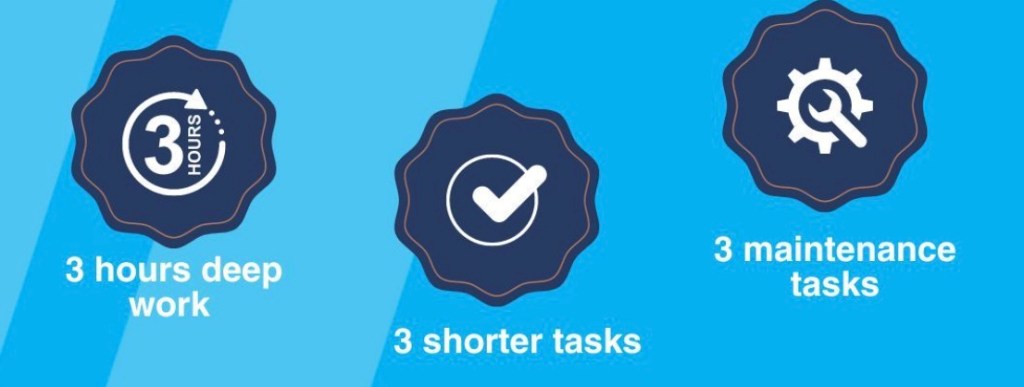
The 3-3-3 method is designed to help you manage your time effectively and maintain focus by dividing your tasks into three distinct categories:
- Dedicate 3 hours to your most important task – Focus deeply on the task that has the highest priority or impact.
- Complete 3 shorter tasks you’ve been avoiding – Tackle those small but lingering tasks that have been sitting on your to-do list.
- Work on 3 maintenance activities – Spend time on activities that help keep your life in order, such as organizing, planning, or self-care.
Dedicate 3 Hours to Your Most Important Task
The first step of the 3-3-3 method is dedicating 3 hours to your most important task (MIT) of the day. This focused block ensures that you prioritize what truly matters and make significant progress toward your goals. Here’s how you can design this method effectively, along with practical examples.
Step 1: Identify Your Most Important Task
- Define the task: Determine what task will have the greatest impact on your goals. Ask yourself:
- What is the one task that, if completed today, will make the biggest difference?
- Is this task aligned with my long-term goals or key deliverables?
- Prioritize: Your MIT should be something significant, not routine. It’s typically something that:
- Requires deep focus and effort.
- Has a deadline or high urgency.
- Drives results in your career, personal life, or project.
Examples:
- For a student: Preparing for an upcoming exam by studying the hardest topic.
- For an entrepreneur: Pitching a business proposal to an investor.
Step 2: Plan Your 3-Hour Block
- Choose the right time:
- Schedule the 3-hour block during your peak energy hours (e.g., morning if you’re a morning person).
- Ensure minimal interruptions by communicating with colleagues or family.
- Break it into chunks:
- Divide the 3 hours into smaller intervals (e.g., 50 minutes of work followed by a 10-minute break). This aligns with productivity techniques like the Pomodoro method.
- Prepare in advance:
- Gather all necessary resources the day before or earlier in the day (e.g., research materials, tools, or references).
- Eliminate distraction (e.g., turn off notifications).
Complete 3 Shorter Tasks You’ve Been Avoiding
The second step of the 3-3-3 method focuses on completing three smaller tasks that you’ve been procrastinating on. These are often low-priority or mundane tasks that don’t take much time but can pile up and create stress. By addressing them, you free up mental space and maintain a sense of accomplishment throughout your day.
Why Focus on Shorter Tasks?
- Mental Clarity: Delayed tasks linger in your mind, creating unnecessary stress. Completing them clears your mental clutter.
- Momentum: Tackling smaller tasks gives you a sense of achievement, boosting motivation for bigger tasks.
- Avoiding Accumulation: Small, unfinished tasks can snowball into larger problems if ignored for too long.
Step 1: Identify 3 Shorter Tasks
- Make a list: Start by listing tasks you’ve been putting off. These might be things you don’t enjoy or feel too small to prioritize.
- Choose wisely:
- Pick tasks that take 15-30 minutes each.
- Focus on tasks that are urgent, repetitive, or have been on your to-do list for too long.
Examples:
- Work-related: Responding to pending emails, organizing files, or updating a spreadsheet.
- Personal: Paying bills, cleaning out your inbox, or scheduling a doctor’s appointment.
Step 2: Prioritize and Schedule
- Set a time limit:
- Allocate about 1.5 hours in your day for these tasks (30 minutes per task).
- Schedule this block during a time when you feel moderately productive but not in peak performance mode.
- Group tasks by type:
- If possible, group similar tasks to streamline the process. For example, batch all communication tasks together or tackle all cleaning tasks in one go.
Step 3: Execute with Focus
- Eliminate distractions: Treat this time as seriously as your larger tasks. Turn off notifications and dedicate yourself fully to the task at hand.
- Follow the 2-minute rule: If a task takes less than 2 minutes to complete (e.g., filing a document or replying to a quick message), handle it immediately instead of deferring it.
Work on 3 Maintenance Activities
The third part of the 3-3-3 productivity method emphasizes keeping your life in order by focusing on three maintenance activities daily. These activities aren’t directly tied to achieving big goals but are essential for sustaining balance, organization, and well-being.
Why Focus on Maintenance Activities?
- Prevention of Chaos: Ignoring maintenance can lead to inefficiencies, unnecessary stress, or even setbacks.
- Support for Long-Term Goals: These activities create a strong foundation that indirectly supports your bigger ambitions.
- Improved Well-Being: Taking care of personal and professional upkeep ensures you have the mental, emotional, and physical energy to focus on important tasks.
Step 1: Identify Maintenance Activities
Maintenance tasks are recurring activities necessary to keep your life or work running smoothly. They typically fall into three categories:
- Personal Maintenance: Focused on health, self-care, and home.
- Work Maintenance: Administrative or routine tasks that support your professional responsibilities.
- Relationship Maintenance: Nurturing connections with family, friends, and colleagues.
Examples:
- Personal: Exercise, meal prepping, or organizing your living space.
- Work: Checking calendars, organizing files, or cleaning up your workspace.
Step 2: Prioritize and Plan
- Choose three key activities daily: Select activities that align with your immediate needs or areas that may have been neglected.
- Set realistic expectations: Maintenance tasks shouldn’t take more than 1–2 hours of your day combined.
Step 3: Execute with Consistency
- Schedule dedicated time: Set aside specific slots in your day for maintenance tasks. Early mornings or evenings are often ideal.
- Batch similar tasks: Group similar activities to save time and increase efficiency.
Step 4: Reflect and Adjust
- Review progress: At the end of the day, reflect on what you accomplished and how it impacted your routine.
- Adapt to needs: As priorities shift, adjust your maintenance tasks accordingly
How the 3 Components Work Together
- Focus and Impact: Spending three hours on your most important task drives major progress toward your goals.
- Clearing the Clutter: Completing three smaller tasks removes mental blockages and distractions, enabling a smoother workflow.
- Sustaining the System: Working on three maintenance activities ensures that you have a solid foundation to keep everything running smoothly.
This synergy creates a balanced, high-impact approach to daily productivity that not only delivers immediate results but also builds long-term success.
Conclusion: The Power of the 3-3-3 Productivity Method
The 3-3-3 method is a simple yet powerful approach to structuring your day in a way that balances productivity, progress, and personal well-being. By breaking your focus into three actionable parts dedicating time to the most important task, addressing smaller pending tasks, and ensuring maintenance activities are covered you can create a framework for a productive and fulfilling day. Let’s recap and understand how this method comes together as a cohesive system:
Thank you for taking the time to read this post! I hope you found the 3-3-3 method as inspiring and practical as I did. I’d love to hear your thoughts what do you think about this approach? Feel free to share your feedback, ideas, or any questions in the comments below. Don’t forget to like and share this post if you found it helpful. Let’s keep the conversation going and inspire others to achieve their productivity goals!

 Note the Story
Leave a comment