It was a beautiful Sunday morning. I stepped out of my home and heard the calming sound of the sea waves. In front of me was the deep blue sea, so peaceful and refreshing. I live in the southern tip of India, in a place called Kanyakumari, where three seas meet. I was born and brought up here, in a town filled with the sound of waves, tourists from around the world, and happy small business owners making a living.
Next to my house, there is a famous Hindu Devi temple.I often see people going there with hopes, prayers, and emotions , some people thanking God for the good things in their lives, others seeking strength for their struggles.But when I was a child, temples meant something else to me. I didn’t go there to pray , I went there to play.
My friends and I used to visit the temple every day to play. One that Sunday, just like any other day, we went there again to enjoy our games. No one ever questioned us because we knew all the staff, and my father also worked there. After playing for a while, we grew tired and sat down to rest.
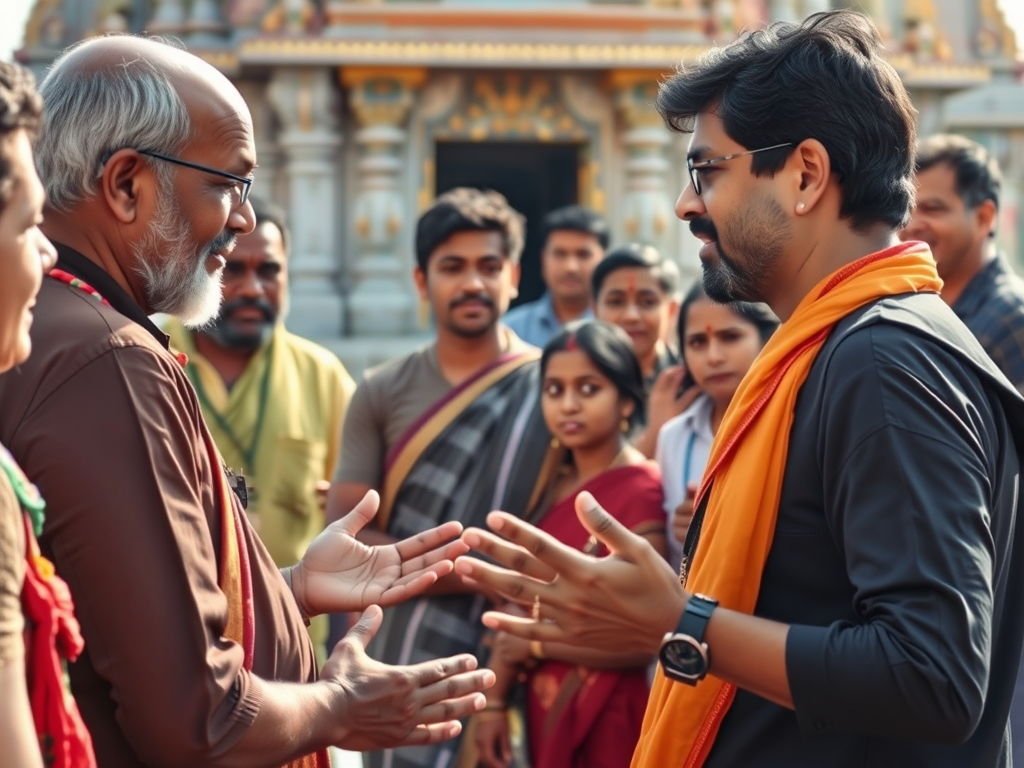
That’s when we noticed the temple guides speaking to visitors who came from different parts of the world. The guides explained the history of the temple and helped families understand the place better. There were about six to eight guides, all skilled in multiple languages.
Among them was Mookan, a man who had never been to school, yet he could speak around 11 languages. Maybe not perfectly, but well enough to share the temple’s stories with visitors in their own language. People loved listening to him, and he often received good tips because they were so impressed. Even now, I wonder how he learned so many languages. Of course, his job helped him, but compared to other guides who spoke only four or five languages, he stood out. He was like a hero to me.
He was kind to me and often played with me. I admired his communication skills. He earned more not because he worked harder, but because he could connect with people better in their own language.
This makes me think: Speaking to someone in their language creates a deeper connection than using a common language.It makes people feel seen, understood, and emotionally connected. They open up more easily.
Learning new languages is always an advantage. Sadly, most of us learn only when education or work forces us. But language is not just a skill it is a bridge. It gives us more friends, more stories, and deeper bonds.
We should feel proud of our mother tongue, but we should also be open to learning other languages. Even learning a few basic words from someone else’s language can make a big difference. It shows respect and builds trust.
So next time you meet someone regularly maybe a friend, coworker, or neighbor try learning a few words from their language. You might be surprised how quickly it strengthens your connection.

 Note the Story
Leave a comment