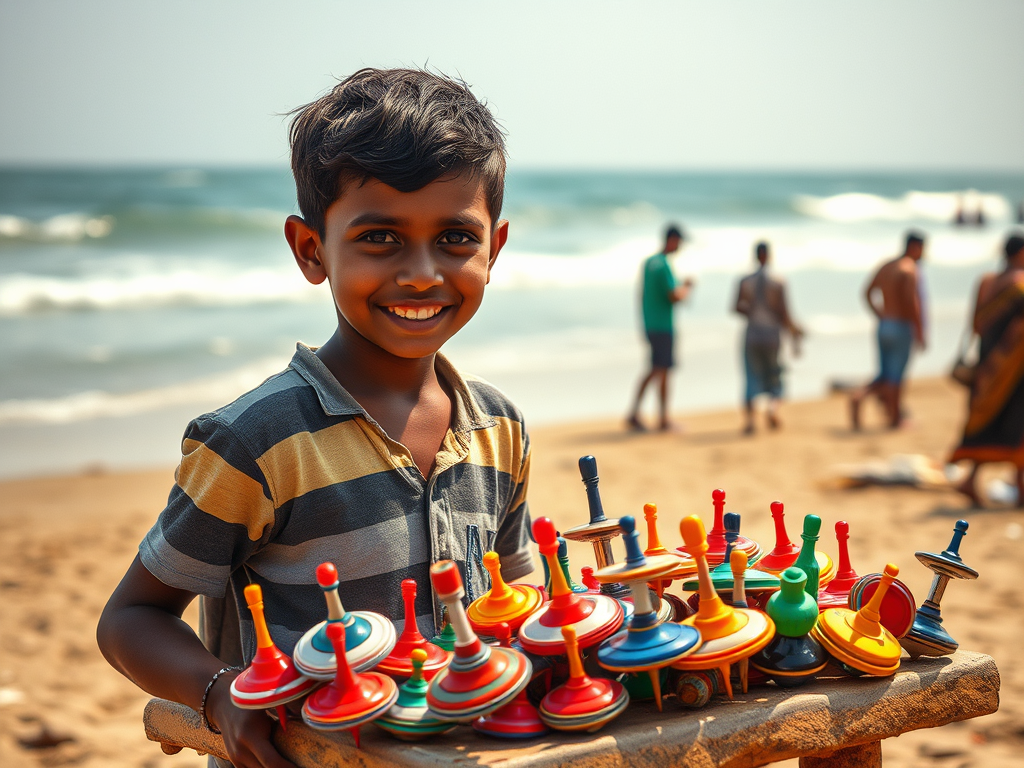
I was just 10 years old when I embarked on my first business. It wasn’t much by today’s standards, but back then, it felt like I was stepping into the world of adults, making decisions, and earning money in my own small way.
It was a hot summer afternoon when I asked my father for money to buy a cricket bat. I had my eyes on a bat I had seen at the local market, imagining the feel of the handle in my grip and hearing the satisfying crack as it struck the ball. But when I asked, my father hesitated. He looked at me with a gentle smile and said, “Son, I wish I could, but I just don’t have the money right now.”
At that moment, I understood more than I had before. My father’s salary was already stretched thin, barely enough to meet our family’s needs. I didn’t feel angry or disappointed—I simply realized that if I wanted that cricket bat, I’d have to find another way.
I lived near the seashore, and many of my friends were already helping their families by doing small trading activities. They’d sell snacks, seashells, and sometimes even fish to tourists and locals. It struck me then—if they could earn money, why couldn’t I? That’s when the idea of starting my own small business began to form.
Growing up in Kanyakumari, the southernmost tip of India where the three oceans meet, I was surrounded by the constant buzz of tourists from all over the world.
It all started when I saw a one of my friend selling spinning tops. The small, colorful toys caught the eyes of children and adults alike. I thought, “Why not try selling them myself?” That’s when I turned to my mother. She had a bit of savings—nothing much, but enough to lend me what I needed. With her support, I borrowed enough to buy 100 spinning tops in bulk, each costing 75 paise. My plan was simple: sell them on the beach to the countless tourists visiting Kanyakumari, but at a higher price. I set my prices between Rs.1.5 and Rs.3, depending on the customer and their interest.
Excited by the prospect of earning money, I set up my spot on the beach, where the waves of the Indian, Arabian, and Bay of Bengal seas converged. But things weren’t as easy as I had imagined. Tourists came from different parts of India and the world, speaking languages I didn’t understand. Trying to sell my tops without knowing how to communicate was a struggle. At first, I felt frustrated and a little defeated, but I didn’t want to give up.
Over time, I learned that selling wasn’t just about words—it was about connection. I watched how others interacted with tourists, and I adapted. Slowly, I figured out how to use gestures, smiles, and basic phrases to engage with customers. I learned to negotiate, to read their body language, and to adjust my pricing based on their interest. It wasn’t easy, but with each interaction, I got better.
After 30 days of persistence, I had sold all 100 spinning tops. My total earnings? Rs.220. That might not seem like a lot now, but for me, it was a fortune. The first thing I did was buy the cricket bat I had been dreaming of for Rs.100. The rest of the money, I gave to my father, who was both surprised and proud of what I had achieved.
That summer taught me lessons far beyond the art of selling. I learned how to communicate without words, how to build trust with strangers, and how persistence could turn a small idea into something bigger. Most importantly, it showed me that with determination and creativity, even the most unlikely dreams could become reality.


 Note the Story
Leave a reply to Sravan Challa Cancel reply