
Investing is one of the most powerful tools for building wealth over time. While earning and saving are critical to financial stability, it’s investing that truly accelerates wealth creation. By allowing your money to grow through wise investments, you can work towards financial freedom and make your money work for you.
One of the biggest advantages of investing early and consistently is the magic of compounding.
Over time, this compounding effect significantly boosts your wealth, especially if you reinvest your earnings.
Creating a clear investment plan begins with defining a specific wealth goal—one that reflects your aspirations, financial needs, and long-term objectives. For example, let’s say you’re aiming to build a portfolio worth 10 crore rupees. While this goal might sound ambitious, it’s achievable with the right strategy and discipline, regardless of your age.
How much time do I have to achieve this goal?
Wondering how long it will take to reach ₹10 crore by investing through SIPs in mutual funds? The chart below illustrates the relationship between your investment tenure, the required interest rate, and the monthly SIP amount needed to achieve this financial milestone. Plan wisely, invest consistently, and let the power of compounding work for you!
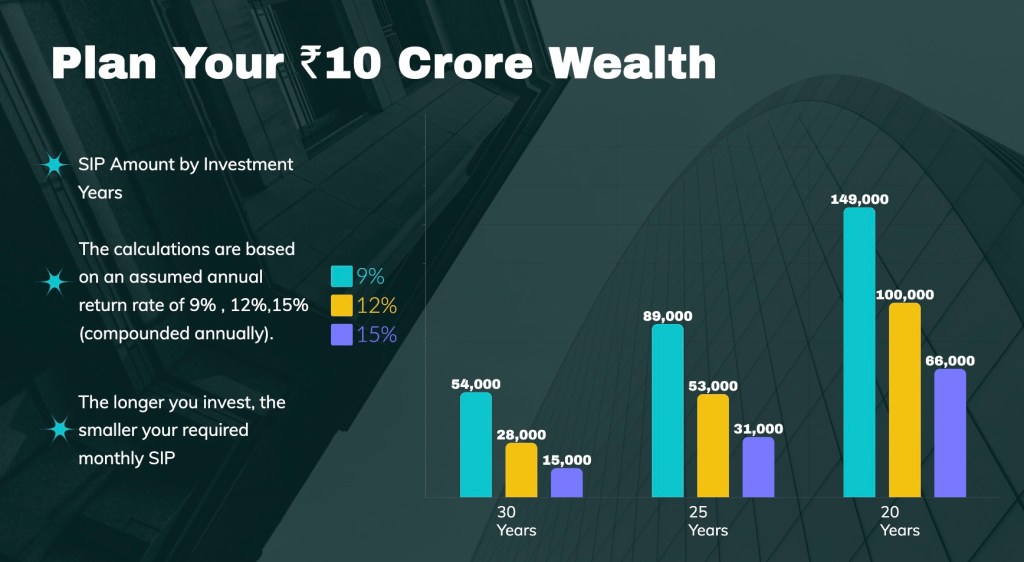
What types of investments (e.g., stocks, mutual funds, fixed deposits) should I consider?
While the chart may look fancy, you might be wondering: where should you invest to achieve the mentioned interest rates? The answer lies in choosing the right investment options based on your risk appetite and age.
Investment Strategy Based on Risk and Age
- If you’re below 25: You can afford to take higher risks for potentially higher returns since you have more time to benefit from the compounding effect.
- If you’re above 40: A balanced or low-risk investment approach is advisable, as preserving capital becomes more critical with a shorter investment horizon.
By aligning your investment choices with your age, risk tolerance, and financial goals, you can confidently work towards achieving your ₹10 crore target. Remember, the key to success is consistency and a long-term perspective.”
What happens if there’s a market downturn or unforeseen events?
Risk management is a crucial factor when building a significant corpus for the long term. Life is full of unforeseen events, and being prepared to face them is essential. That’s why having a well-thought-out risk management strategy is key.
One effective approach is portfolio diversification—spreading your investments across various asset classes to balance returns and risks. However, the question remains: How should you diversify your portfolio? This requires careful planning tailored to your financial goals, risk appetite, and market conditions.
To make informed decisions, consider seeking advice from financial experts who can guide you in creating a robust and balanced portfolio. A good strategy not only safeguards your investments but also helps you achieve your financial targets with confidence.
What is the impact of starting early vs. late?
When it comes to building wealth, the time you start investing plays a critical role. Starting early can significantly boost your financial growth, thanks to the magic of compounding. Here’s why:
Compounding means earning returns on both your original investment and the returns it generates over time. The longer your money stays invested, the more it grows exponentially.
- Example:
If you invest ₹10,000 monthly at an annual return of 12%:- Starting at age 25, by 60, your wealth grows to approximately ₹5.5 crore.
- Starting at age 35, by 60, your wealth grows to approximately ₹1.8 crore.
The 10-year delay costs you nearly ₹3.7 crore in potential wealth, all because compounding had less time to work its magic.
Early investments allow you to build wealth steadily without overburdening your income. Over time, this creates a safety net, giving you financial freedom to explore other opportunities, such as starting a business or early retirement.
How often should you review and adjust your investments?
This is an important question for any investor. Ideally, you should review your investment portfolio every six months. Regular reviews help you stay informed about the performance of your investments and ensure they remain aligned with your financial goals.
However, it’s crucial to avoid making frequent changes to your investment strategy unless absolutely necessary. Adjustments should only be made in response to major changes, such as shifts in your financial goals, risk tolerance, or significant market conditions.
Constantly tweaking your strategy can disrupt the compounding effect and hinder long-term growth. Instead, focus on a disciplined approach, staying consistent with your plan, and only making changes when they are genuinely required. Remember, patience and consistency are key to successful investing.
Can I adjust my lifestyle or extend my timeline to meet my financial goals?
This is a common question many people ask. The answer is yes—adjusting your lifestyle can play a significant role in achieving your investment goals. Avoid unnecessary spending and focus on differentiating between your needs and wants.
By keeping your lifestyle simple and aligned with your financial priorities, you can allocate more towards your investments, bringing you closer to your long-term objectives.
If needed, you can also extend your investment timeline slightly, allowing your money to grow through the power of compounding. However, the key is to maintain discipline, prioritize your goals, and resist the urge to indulge in avoidable expenses. Remember, financial success often lies in balancing your present comfort with future security.
Key Takeaways
Regardless of your starting age, a goal of 10 crore rupees is achievable through disciplined investing, consistency, and adjusting your strategy over time. Here’s a quick recap of the best practices across all ages:
- Start Early and Invest Consistently: The earlier you start, the less you need to invest monthly to reach your goal.
- Leverage Compounding: Reinvest returns to maximize the power of compounding over the years.
- Adjust Risk Based on Age: Young investors can afford more risk, while those closer to retirement should focus on preserving capital.
- Review Annually: Regularly assess your portfolio to ensure it aligns with your financial goals and adjust as needed.
- Seek Professional Advice: Consulting a financial advisor can help tailor your investment plan to your unique needs and goals.
Investing for the long term with a clear plan, patience, and the discipline to stay consistent can help you reach your wealth target. Whatever your age, start today, and let compounding work its magic on your financial future!
Start your investment journey today if you haven’t already. If you’ve begun with small steps, it’s time to aim higher set big financial goals and work towards achieving them with determination and consistency.
Thank you for taking the time to read my post! I’d love to hear your thoughts please share them in the comments section. If you found this post helpful, don’t forget to share it with your friends and family. Let’s inspire more people to take charge of their financial future!


 Note the Story
Leave a reply to Prasanna Cancel reply