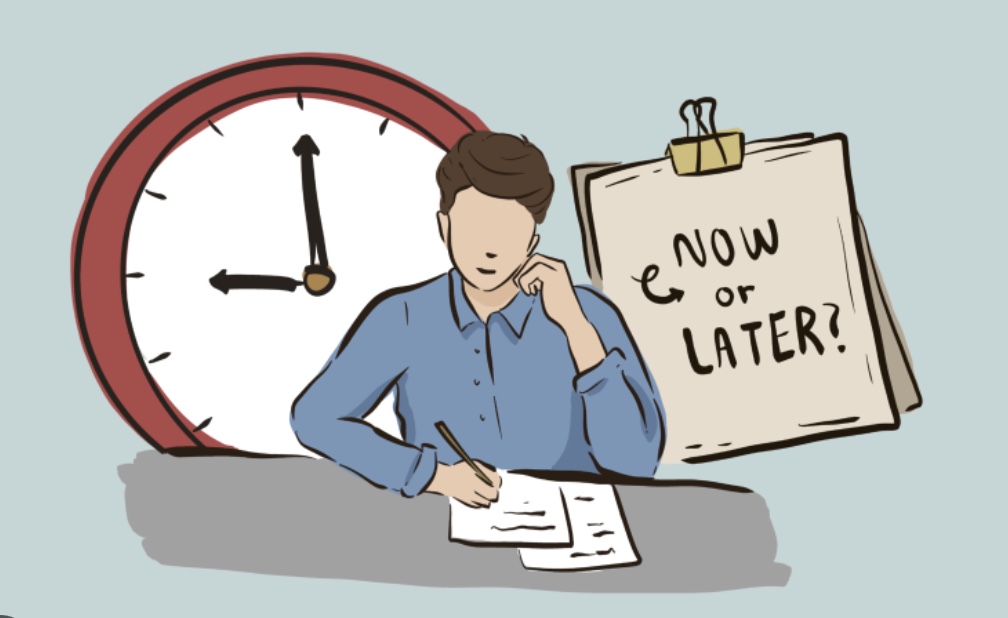
Do you find yourself struggling to stay on track? You want to study, work hard, and follow through on your plans, but instead, you keep delaying, putting things off, and ultimately find yourself in a difficult situation.
I struggled with this problem too and decided it was time to make a change. I began searching for ways to overcome procrastination and eventually understood the root causes behind it and how to effectively tackle it.
Understand the problem
Many people think that procrastination is due to lazy habits or just plain incompetence, but it couldn’t be further from the truth. Procrastination actually finds its roots in our biology. It’s the result of a constant battle in our brain between the limbic system and the prefrontal cortex.
According to neuroscience, procrastination occurs because of a conflict between two parts of the brain: the limbic system, which craves immediate pleasure and rewards, and the prefrontal cortex, which handles rational decision-making and long-term planning. When faced with a challenging task, the limbic system often overpowers the prefrontal cortex, leading us to delay the task in favor of instant gratification.
Our brain is designed to prioritize comfort and avoid effort. For example, if I ask you to open Instagram or YouTube, you’ll do it instantly without hesitation. Why? Because our brain has formed a habit around these activities, associating them with ease and comfort.
If I ask you to start studying a programming language, you’re unlikely to dive in immediately. That’s because it requires effort to figure out which language to learn, where to find the right resources, and how to approach the learning process.
Whenever you try to take on a challenging task, your brain, being inherently lazy, starts making excuses. This happens because tougher tasks require a high level of activation energy, which creates discomfort for the brain. To avoid this discomfort, your brain opts to delay the task and resorts to procrastination, seeking comfort instead.
How do we solve this problem
Let’s take an example: you’ve planned to start an important task at 3 PM. As the time approaches your brain starts anticipating the effort required for this challenging task. It begins to hesitate, thinking, This is going to be hard. To avoid the discomfort, your brain creates excuses and convinces you to postpone the task to 5 PM or 6 PM. But when 5 PM arrives, the same cycle repeats, and the task gets delayed again.”
If you plan to start studying or any other important task, don’t give your brain a chance to make excuses—start immediately. Use the 5-Second Rule: begin the task within 5 seconds. Simply count down from 5, 4, 3, 2, 1, and then take action. Whether it’s reading a book, going to the gym, taking a walk, or making a phone call, this rule helps you bypass procrastination.
Why count down from 5 instead of counting up? Because if you count from 1 to 5, your brain might keep going—6, 7, 8—losing the sense of urgency. A countdown from 5 to 1 creates a sense of finality and urgency, prompting immediate action. This simple trick helps you overcome hesitation by tricking your brain into action before it defaults to seeking comfort.
Experts in neuroscience explain the method is successful because it acts on the prefrontal cortex, or where decision making, memory, and reasoning happen. When faced with something stressful or uncomfortable, your brain will try to find an excuse but through applying 5 Second Rule, you are asserting control over your own thoughts
Conclusion
Procrastination is a common struggle rooted in the way our brain is wired to avoid discomfort and seek immediate gratification. Understanding the science behind it how hesitation, comfort, and activation energy play a role gives us the tools to overcome it.
By implementing strategies like the 5-Second Rule and taking immediate action, we can trick our brain into breaking free from its excuses and build habits that lead to productivity and success. Remember, the key to defeating procrastination is to act quickly, stay consistent, and keep your focus on long-term growth over short-term comfort.
Thank you for taking the time to read my post on procrastination. I hope these insights and strategies help you take control and overcome procrastination in your own life.
I’d love to hear your thoughts! Please share your feedback in the comments without procrastination or hesitation it’s a great way to start practicing what you’ve just learned. And if you found this post helpful, don’t forget to like it. Your support means a lot


Leave a Reply