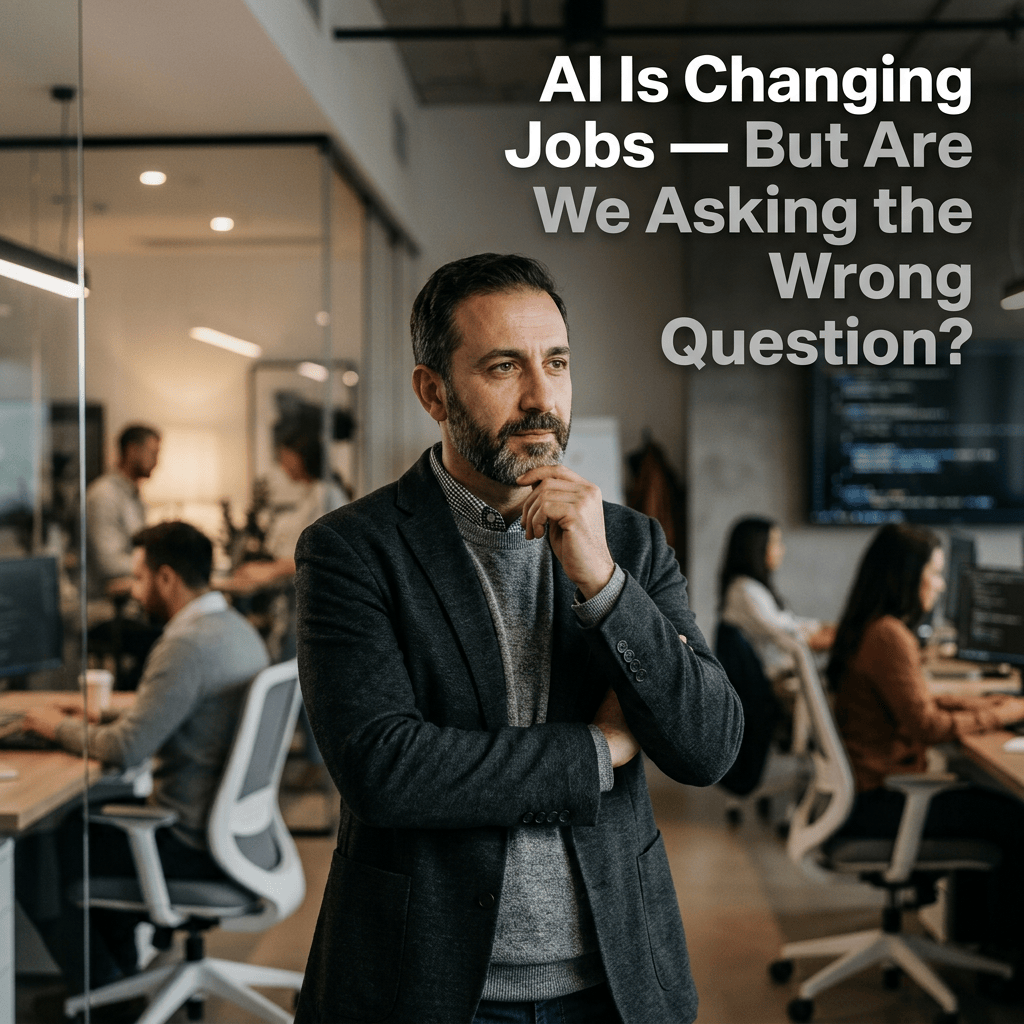
I started my IT career when traditional servers were at the center of everything. Over the years, I watched the industry move through virtualization, cloud, automation, containers, and now artificial intelligence.
Every major change brought some uncertainty. People wondered whether virtualization would reduce jobs, whether cloud would eliminate infrastructure teams, or whether automation would make administrators less important.
But something interesting happened. Technology changed the work more than it eliminated the people doing it. New skills emerged, and people who adapted moved forward.
AI feels different because it is not just changing the technology we work with. It is beginning to participate in the work itself. It can write, summarize, analyze, troubleshoot, generate ideas, and even help make decisions.
That is why I think we may be asking the wrong question. Instead of asking, “Will AI take my job?”, perhaps we should ask, “How will my job change because of AI?”
This is not only a technology story. AI is already becoming part of everyday work.
It can help someone write an email, prepare a presentation, analyze information, learn a new skill, create a report, or solve a technical problem. In many jobs, AI may not replace the entire role—but it can change how much time we spend on certain tasks.
The bigger shift is that AI can automate parts of knowledge work, not just repetitive physical tasks.That means the advantage may increasingly go to people who know how to work effectively with AI rather than people who simply know how to use traditional tools.
After more than two decades in IT, I’ve learned that technology keeps changing, but one thing remains constant: the ability to adapt matters more than the ability to predict the future.
I’ve seen people worry about new technologies, while others used the same technologies to create new opportunities for themselves.
I don’t think everyone needs to become an AI engineer or understand how large language models work internally. But we should understand how AI can improve our own work.
Our experience still matters. Judgment, communication, problem-solving, and understanding the business are things that technology doesn’t automatically provide.
Perhaps the future will not simply be humans versus AI. It may be people who know how to work with AI versus people who don’t.
We don’t need to predict exactly which AI technology will succeed. We need to become comfortable learning and adapting.
Start small. Use AI to learn something new, summarize information, brainstorm ideas, analyze data, automate a repetitive task, or challenge your thinking.But don’t blindly trust it either. The more capable AI becomes, the more important human judgment becomes.
Technology will continue to change. Our tools will change. Our jobs will change.Our willingness to learn should not.If AI can do part of my job tomorrow, what should I learn today so that I can focus on the more valuable part?
After more than two decades in IT, I’m still learning.And perhaps that is the most important lesson technology has taught me.

 Note the Story
Leave a comment